The Evolution Of The Makélélé Role

A true winner; Makéléle designating orders

Shuttling up and down the pitch, fiercely snatching away the ball from the unsuspecting prey, the destroyer moves in a way that is akin to a race-grade 18-wheeler; powerful and always on the move. But where did this torrid affair between tactic and brutality begin? Tracing things back to its unassuming originator, Claude Makélélé, one finds that like so many great midfielders of his generation and beyond, he was an incredibly gifted, hardworking and tenacious player, capable of playing multiple positions in the centre of the pitch. However, unlike any other midfielder of his generation, he revolutionized and unbeknownst to him, created what is known as the modern-day defensive midfielder.

Makélélé was born in Zaire (now known as DR Congo) and moved along with his parents to Savigny-le-Temple, a suburb in Paris in 1977 when he was four years old. At 15, his talents for football were recognized, and he signed with U.S. Melun in the city of Melun, carrying his father’s legacy ahead. Moving around to Brest when he was 16, he found that he didn’t enjoy playing much in the region. However, Nantes was where Makélélé would discover his pleasure for football.

Recruited in 1991 when he was only 18, he slowly made himself one of the first names on the team sheet by the 1992-93 season. The still teenaged Makélélé was then transferred to Celta Vigo in Spain, where he would go from strength to strength, and similarly at Real Madrid, where he was hailed as the engine of the team to sign for Chelsea where he was revered as a legend.

Looking at how he functioned in legendary Italian manager Arrigo Sacchi’s Galacticos setup, we see that Makélélé had a keen eye for the ball-winning tackle. As Sacchi himself put it, “we knew that Zidane, Raúl and Figo didn’t track back, so we had to put a guy in front of the back four who would defend.” This was a very under-the-umbrella expression of Makélélé’s talents, as he did more than protect the back four.

It was his job to roam and disrupt the other team’s rhythm and flow, win the ball almost at will and bring it forward. He usually started deep, marking his opposing hole player. Makélélé made life difficult for his opponents, and it was at Madrid that his transformation into a holding midfielder was completed. So much was his impact that when Florentino Perez decided Makélélé wasn’t flashy enough to be a Galactico and sold him to Chelsea, there was general unrest in the Madrid squad. Zinedine Zidane had famously stated, “Why put another layer of gold on the Bentley if you’ve already sold the engine?”, referring to the acquisition of David Beckham in the same transfer window.

A generational player like no other, the current Chelsea youth coach set an example for aspiring holding midfielders like him. Javier Mascherano springs to mind, an exceptionally talented destroyer and centre-back capable of going forward and supporting the team with numbers in attack, as well as tracking back and anticipating the ball.

Throughout history, we have seen the emergence of destroyers and their significance, utilized to its full potential in a 4-2-3-1 or a 4-4-2 diamond formation. In the 4-2-3-1, the carrier or the midfielder tasked with pulling strings and setting the pace of the game is usually protected and given freedom to roam by the destroyer who sits back and shields the backline. In a 4-4-2 setup, a slightly tweaked role sees the holding midfielder operating as the carrier and the destroyer simultaneously.

In the case of the former, successful examples include the combination of Toni Kroos and Casemiro at Real Madrid, with Casemiro being hailed as the second coming of the mercurial Makélélé himself with Kroos, one of the best midfielders of his generation, acting as the puppet master, under the master stewardship of Zidane. Other examples include Xavi Hernandez and Sergio Busquets in the prime of Pep Guardiola’s time at Barcelona, and his use of Kevin De Bruyne and Fernandinho at Manchester City.

The 4-4-2 system sees stalwarts in defensive midfield such as Xabi Alonso and Sami Khedira as prime archetypes of this role.

The likes of Sergio Busquets and Julian Weigl are players that have taken the role of the classic destroyer the extra mile. While their MO is to progress the ball up the pitch, nicking the ball from the opposition’s attackers is their bread and butter. Chelsea’s Jorginho is the perfect example of the fact that a No.6 that is renowned for his ball progression and in this process, ends up failing to fulfill his defensive duties is for the most part, rightly slated. As a result, defensive durability is a non-negotiable attribute.

But to not talk about the sheer impact Makélélé had on the overall style of football and reverence to defensive ability that is shown today would be a crying shame. The midfielder was also responsible for revolutionizing the way defence changed as a priority further up the pitch as well, with his kind of tireless and unerring pressing paving the way for teams using even strikers to chase down defenders looking for even a hint of a mistake. Forwards such as Diego Costa, Roberto Firmino and Alexandre Lacazette have built entire careers out of their sheer running and dogged pressing.

Busquets differed from the Makélélé mould of defensive midfielder, however the core principles of his role were present in his game

But to not talk about the sheer impact Makélélé had on the overall style of football and reverence to defensive ability that is shown today would be a crying shame. The midfielder was also responsible for revolutionizing the way defence changed as a priority further up the pitch as well, with his kind of tireless and unerring pressing paving the way for teams using even strikers to chase down defenders looking for even a hint of a mistake. Forwards such as Diego Costa, Roberto Firmino and Alexandre Lacazette have built entire careers out of their sheer running and dogged pressing.

N’Golo Kanté, arguably the best defensive midfielder in world football, has Makélélé to thank for the kind of player he is today. A truly unique talent, his defensive ability has been well documented, but his ability to bring the ball forward is also a trait he shares with the fellow Frenchman and has further developed it into an art form.

Kanté truly is the second coming of Makélélé

Casemiro at Real Madrid is an example of how life has come full circle for Florentino Perez, as the kind of engine he once sought to remove because of his tendency to veer towards the flash and flair has the Brazilian international as a key part of his modern-day iteration of the Galacticos.

A true football genius far ahead of his time and generation, Claudé Makélélé is responsible for the kind of football that we all enjoy today, although his contribution is the aspect that gets sidelined most often. A rare pearl in the oyster of football history, here’s to one of the sport’s greatest contributors.

Pietro Pellegri: Monaco’s Freshest Diamond In The Rough

If a sequel to British grime virtuoso, Skepta’s 2017 documentary “Greatness Only” lies in the realms of possibility, Pietro Pellegri is certainly a potential poster boy for it. The latest import to further piece together Monaco’s “Moneyball” transfer policy, the former-Genoa frontman became the youngest-ever debutant for the defending Ligue 1 champions in a 4-0 victory against lowly Dijon on 16th February, 2018.

On the surface, however, it would seem to be no mean feat for the precocious Pellegri who has a propensity for etching his name into the history books. At 15 years and 280 days old, he became the joint-youngest player to play in Serie A against Torino in December 2016, sharing the record with the legendary Amedeo Amadei, one of the 11 players to be inducted into A.S Roma’s Hall of Fame.  

Keeping Roman icons in mind, the Genoa youth product became a household name in Francesco Totti’s farewell match. It was an emotional afternoon at the Stadio Olimpico with tears of joy and sadness running down the faces of the 70,000-odd La Magica faithful.

Three minutes into the encounter and a piercing through-ball from Darko Lazovic put Pellegri through on goal to slot past Wojciech Szczęsny to drizzle over the Francesco Totti-parade. However, an Edin Dzeko-inspired Roma performance handed II Capitano (The Captain) -as he is affectionately addressed- a penultimate victory in the historical I Giallarossi (The Yellow and Reds) which ended 3-2.

To put things into perspective, Pellegri was born in 2001, the same year Totti won his first title in the form of a Supercoppa Italiana for Roma.

Another record was on the way for the prodigious talent who became the youngest-ever player to score a brace in the Serie A at 16 years and 112 days against Lazio in a 2-3 defeat. A heroic performance in what was once again a losing cause, Pellegri was overcome by emotion in his post-match interview after seeing his father shed tears on the Grifone bench.

“In football, my father has looked after me. He used to bring me to training, in the rain and the cold. To see these images of my father is so beautiful.”

Pietro’s exploits in a youth tournament in 2015 impressed Manchester United to such an extent that they offered the wonder-kid’s father a high-paying job in England.

However, the Pellegris were true Genoanos and as a result, a chance to ply their trade at arguably the biggest club in the footballing stratosphere was not enough to tempt them to make the switch. This intense adoration for the club can be reflected in Pellegri Sr.’s comments in which he expresses:

“The day Pietro steps out at Marassi wearing a Genoa shirt, I can go ahead and die, because it will mean I will have seen everything.”  

The Pellegri-Genoa story was a match made in heaven and the teenager established his presence as a firm fan’s favorite.

A feeling of ecstasy had captured the city and on certain occasions, emotions got the better of certain individuals such as the likes of Genoa president Enrico Preziosi who claimed, “We have got the next Leo Messi in the house” was a bolt from the blue.

The “next Messi” tag is somewhat of a jinx as it has seen promising careers fizzle out into such extreme mediocrity that the initial career highlights of these starlets lie merely in several YouTube clips accompanied by dubstep soundtracks for years to come. Case in point, Bojan Krkic.

Pellegri

Prezicosi’s comparison was far-fetched, to say the least, between a highly exciting prospect, and the greatest player in history to ever play the beautiful game. Moreover, it was a bizarre parallel as Pellegri operates in the mould of his idol, Zlatan Ibrahimović, as he is an intimidating presence, much like the Swede, standing at 6’2 and can wreak havoc in the box, holding-up play effectively while being deceptively fleet-footed for a man of his stature.

However, all good things come to an end, and Pietro decided to leave his beloved Genoa for French pastures by signing for Ligue 1 giants, AS Monaco for a cool 20m euros.

The 16-year old cited the Monegasques’ as a hub for youth development by saying, “I was quickly convinced of the project that allows young people like me to progress and flourish in the future.”

The timing of the move was rather sudden as fans and experts alike expected Pellegri to further bolster his arsenal of skill sets and gain much-needed experience in Italy before earning a big move to one of Europe’s cream of the crop, with clubs such as Inter Milan and Juventus sniffing around for the teenager’s signature.

In addition, statements from the Genoa camp, in particular manager Davide Ballardini such as, “Pietro will grow into one of the best Italian strikers” gave the impression that while the youngster was waiting in the wings to cement his place into the first-team, he was certainly in the manager’s vision.

Pellegri has two vital T’s at his disposal: time and talent. The level of graft that he puts into his craft can either transport him into Kylian Mbappe’s Parisian utopia or Wellington Silva’s abyss of a career, dominated by loan spells, and a return to Brazil.

Jadon Sancho: A Cut Above The Rest

History suggests that the notion of English footballers departing to greener pastures abroad in the pursuit of blossoming on the biggest stages is somewhat of an anomaly. While sizeable names such as Gary Lineker, Steve McManaman and David Beckham instantly spring to mind, it is important to note that each of these stalwarts jumped ship during the prime of their careers.

On the other hand, the likes of Joe Hart, Ravel Morrison and Jermaine Pennant were left with no option but to move to foreign leagues to resurrect their sinking ship of a career. Borussia Dortmund’s Jadon Sancho has defied the tried and tested as well as the escapists of English football by venturing into the Bundesliga at such a young age with the mindset of creating his own opportunities instead of waiting for them.

Not only has the 18-year old been exposed to a footballing education like none other at the Westfalenstadion, but he has also undoubtedly transformed into one of the most sought-after attackers in the world. However, as any success story does not come overnight, Sancho’s rise to prominence was a gradual process of patience and sacrifice.

From the Ground up

Sancho gravitated towards the beautiful game from an early age and his sparked interest prompted him to join Watford’s academy at merely 7 years of age. As he showed signs of progression, the youth decided to take the bold step of migrating from his district of Kennington in South London to the club’s Harefield Academy in Uxbridge, West London to devote his full attention to football. Much like most footballers around the world, Sancho was also faced with initiating such a life-changing decision as a teenager at 13 years old. However, the youngster had no qualms about what his ambitions were from the outset.

Sancho’s youth coach at Watford, Louis Lancaster recounts an incident about the then-13-year-old forward’s aspirations that truly blew his socks off.

“I asked him, ‘What’s the dream?’ He looked me dead in the eye and said he wanted to play for one of Europe’s top clubs and represent his country to make his family proud.”

The prodigious talent was always blessed with an outstanding penchant for flair and technique, but what set him apart for the coaches was his fearlessness in his pursuit for excellence. Being diminutive in stature, Sancho would often be outmuscled by his peers and was in serious need to bulk up in order to take his game to the next level. However, instead of going inside his own shell, Sancho rose to the challenge of competing with physically superior players that belonged to older age groups.

Lancaster shed light on Sancho’s supremely mature approach to this moment of adversity from an early age:

“Some boys are scared of moving up a year, but he embraced it. That was one thing that separated him from the others. As a coach, you can measure how many passes they make, how many shots they take, how far they run, but it’s the immeasurable qualities that make the difference.”

Sancho’s brilliance shined through initially during his England U-16 days when he tormented defenders with pace to burn and a bag of flicks and tricks. His end product was never in question during this period. He scored 6 goals in 7 matches, emerging as one of the country’s most promising talents among his contemporaries.

However, the 2016-17 season was Sancho’s big break as he registered 20 goals and 7 assists across all competitions. His performances in the U18 Premier League, in particular, earned him rave reviews as he struck a hat-trick on two occasions, against the Blackburn U18s and the Wolves U18.

Jadon Sancho U-17 European Championship

Sancho earned a call-up for Steve Cooper’s England U-17 squad for the Under-17 European Championship in 2017. He dominated proceedings as he was directly involved in 10 of the Three Lions’ 14 goals with 5 goals and 5 assists. The rapid winger put in clutch performances during the business end of the competition with a standout display against Turkey in the semi-final in which he grabbed a brilliant assist and scored the winner as England ran out 2-1 winners.

Despite Steve Cooper’s men succumbing to defeat against Spain in the final, Sancho was voted as the “Best Player” of the tournament, an accolade previously won by superstars such as Toni Kroos, Cesc Fabregas and Wayne Rooney.

Despite Sancho doing all of his talking on the pitch, he was well aware that his path to the first-team was blocked by arguably two of the league’s most talented wingers in Leroy Sane and Raheem Sterling and the multifunctional Bernardo Silva.

While Pep Guardiola was keen on the youngster signing a record contract that would offer him 30,000 pounds per week, Sancho defied his initial verbal agreement with the manager to accept a move from Borussia Dortmund. The Catalan boss had included Sancho as a part of his plans for the upcoming US tour, however, once he dropped the bombshell of refusing the contract, his mind was made up on moving to the Bundesliga giants.

A distraught Guardiola was left unimpressed as Sancho did not fall back on his word. However, Guardiola maintained a certain grace in the public eye as he wished the exuberant prospect luck on his need for a change of scenery.

We did absolutely everything but I think it was not about the salary, maybe he thought he would get more minutes at Dortmund and I can understand that.”

Dortmund Dominance

On 31st August 2017, Borussia Dortmund clinched the signing of Sancho for a fee around the region of 8 million pounds, becoming the first ever Englishman to seal a transfer to The Black and Yellows.

As Ousmane Dembele put pen to paper to join Barcelona for an enormous 135.5-million-pound fee, Dortmund had discovered their new No.7 in Sancho. The number holds a high significance in modern football, however, Sancho remained unfazed with the pressure of donning the prestigious shirt.

“I would have taken any number but getting seven was a big boost to my confidence. It doesn’t faze me. It is about coming here and proving myself.”

While Sancho was easing into life at the Westfalenstadion during his first season, his second and third seasons have put him right in and amongst the best wingers on the planet.

The proof is in the pudding, however, the question that demands answering is what exactly Sancho has brought to the table for Borussia Dortmund?

A winger by trade, Sancho is capable of operating on both flanks, however, under Lucien Favre’s tutelage, Sancho has thrived on the right-hand side; 75% of his goal involvements this campaign have come from the right. The former Man City forward’s predominant skillsets lie in his ability to beat a man, completing a mouth-watering 2.2 dribbles per game. In addition to this, Sancho is equally gifted at dribbling on both the inside and the outside of a defender.

A fine example of his fleet-footedness was on display against SC Freiburg last season when he left two defenders for dead by swiftly turning past them and nutmegging each player separately.

However, Sancho’s showmanship is typified by his directness as indicated by his assist for Marius Wolf against Eintracht Frankfurt earlier this season. The Englishman utilized his pace to full effect by getting in behind the defender, cutting the ball back onto his left foot and delivering a pinpoint cross for Wolf, who arrived late and put the ball into the back of the net. This piece of play showcased that Sancho does not hesitate to use his weak foot and more importantly, his decision-making in the final third is top drawer.

A standout feature of Sancho’s supremacy on that right channel has been his telepathic relationship with Marco Reus on the pitch. Their interplay is typified by the latter dropping into a deep midfield position, releasing a through pass to the 18-year old who uses his burst of pace to receive the ball and cutting it back to the Dortmund skipper to dispatch.

An archetypal Sancho-Reus goal was the one scored against Bayer Leverkusen in their 4-2 victory that followed this exact same pattern.

Jadon Sancho & Marco Reus

Sancho has been Dortmund’s chief supplier this campaign, putting in 1.5 key passes per match. While this figure has been bettered by other top tier wingers, Sancho’s decision making is what usually helps

him convert his chances created to actual goals. That’s a sign of a dominant player.

Success at club level prompted Gareth Southgate to hand Sancho his maiden cap for England against Croatia in the UEFA Nations League 2018, as he came on as a 78th-minute substitute.

Much like any winger, Sancho has a tendency of losing the ball more than required. On an average, he is dispossessed 1.6 times per match which shows there is definite room for improvement. In terms of the defensive side of things, while the likes of Hakimi and Piszczek have handled the defensive responsibilities on the right-hand side, a modern winger must be able to track back to satisfy the tactical flexibilities in all types of matches. Sancho needs to work on helping his full-back out more often, but he has time on his side to hone these aspects.

Influence

While fellow Englishman and close compatriot, Reiss Nelson has also made waves in Germany, Sancho continues to be the model young player for many due to the fact that he has become a big fish among the world’s finest.

He has successfully managed to carve out his own lane in Dortmund. Fellow England Under-17 teammate, Callum Hudson-Odoi must have witnessed Sancho’s growth and factored that in while making his decision to try to secure an impending transfer to Bayern Munich.

Bournemouth striker, Dominic Solanke has described Sancho’s career trajectory as an inspiration to other young players.

“Sancho is doing well in Germany and a lot of players would like to follow his path. What he’s done, getting into the England team at such a young age, it will influence a lot of young players.” – Solanke

As Solanke rightfully pointed out, the “Jadon Sancho effect” will give youth prospects the courage to make brave moves with the hope of flourishing.

Felix Sanchez: The Visionary Behind Qatari Football’s Rise

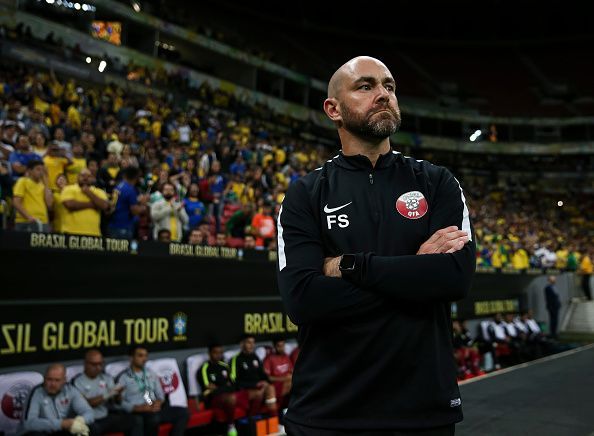
Brazil v Qatar

Despite Qatar being at the forefront of football’s worst kept secret after violating a mirage of ethical codes in their quest to host the FIFA World Cup 2022, Al-Annabi (The Maroons) have found a beacon of hope. Felix Sanchez has brought about this wave of optimism in Qatari football after masterminding a historic AFC Asian Cup triumph in 2019.

Rubbing shoulders alongside countries such as Japan, China and Australia that have produced players who have shined across Europe’s most contested leagues, Qatar’s prospects as mere contenders were also out of the question. Despite all the odds stacked against their favor, their talismanic manager in Felix Sanchez ensured that his troops rose to the occasion and that too in emphatic fashion.

Their exploits in the competition led them to gain entry alongside Japan into the Copa America 2019 as the COMBEBOL decided to invite two of Asia’s best sides to participate in the tournament. However, the obvious question that demands answers is how the Spanish coach led Qatar to unprecedented glory?

Sanchez possesses pedigree in abundance as he worked as a Barcelona youth coach for a decade. At a club that is celebrated for having at its disposal the most prodigious youth academy on the planet, Sanchez had the opportunity to impart the ‘Barcelona way’ onto future stars such as Gerard Deulofeu and Sergi Roberto. After a decade of honing the mercurial talents of La Masia, Sanchez decided to move on to pastures new in 2006 to pursue a coaching career in Qatar.

He joined Aspire Academy, the nation’s standout sports academy that aimed to develop Qatari athletes. Much like any youngster’s rise through the ranks, Sanchez’s progression to eventually become the manager of the Qatar national team bore clear similarities.

After his stint at Aspire Academy, the Spanish boss was at the helm of the Under-19 Qatar team in 2013. In a space of just a year, Sanchez’s wealth of knowledge as a youth coach was for Asian football to witness as Qatar emerged as first-time winners. Conceding an impressive 4 goals while scoring 15 in 6 matches rounded off a stunning tournament for the Qatari starlets.

Sanchez’s fruitful spell led to him taking charge of the Under-20 and Under-23 outfits before landing the top job of managing the senior team. The Spaniard’s climb up the ladder of Qatari football can be compared with Gareth Southgate’s model of success as Three Lions gaffer. Much like how the Englishman had previous experience of managing several of the squad that flourished in last year’s World Cup during his days as Under-21 boss, Sanchez also selected 10 players from the Under-23 setup to represent Qatar in the AFC Asia Cup.

This bold approach was balanced by a pragmatic philosophy to equip Al-Annabi to go toe-to-toe against Asia’s very best. Deploying a 5-3-2 formation, Sanchez’s vision for his side was everything a traditional cule would reject. In order to bring his ideas to life, there were certain players in specific areas in particular that had to step up to the plate. Pedro Miguel and Abdel Karim Hassan were the heart of this system as the pair provided excellent width down the flanks while not leaving any stone unturned defensively. The steel in midfield was a result of the tough-tackling duo of Abdul Aziz Hatem and Assim Madibo who ensure that the back 3 are not left exposed.

Practicality ultimately did not fully outweigh flair as striker Almoez Ali emerged as the top scorer with a brilliant return of 9 goals and bagged the ‘Best Player’ accolade.

A counter-attacking system meant Qatar compromised on dominating the ball and instead capitalizing on the chinks in the armor of more technically adept teams through directness and precision.

Despite having only 38% possession, Qatar ran out 3-1 winners against a Japanese side that fielded the likes of Maya Yoshida and Yuto Nagatomo who play in the Premier League and the Bundesliga respectively. This was a testament to their ruthlessness in front of goal as they converted all of their 3 shots on target.

However, Sanchez managed to construct a setup that covered all bases as Qatar scored over 2.5 goals per match while goalkeeper Saeed Al Sheeb picked the ball just once out of his net.

With the Copa America less than two weeks in sight, even the staunchest Qatari supporters would not expect their team to topple the likes of Brazil, Argentina and Colombia to name a few. However, the fact that Qatar could even stake a claim in such a major tournament and compete against such terrific teams is all down to the heroics of Felix Sanchez. Ultimately, it is a sizeable step in their journey to create a footballing culture in and across the nation.

Lazio vs Roma: A Feud That Knows No End

A world of its own

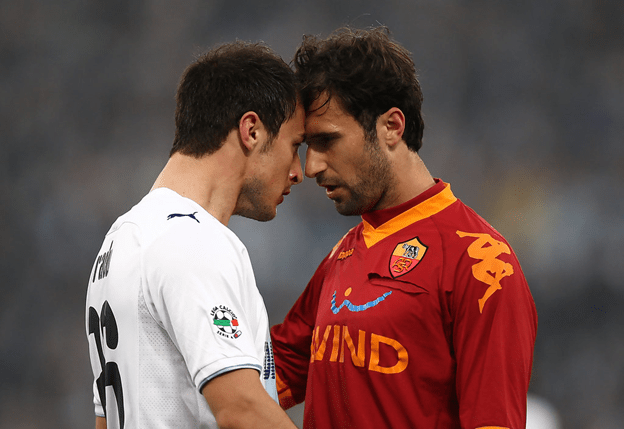
Despite the unrestrained antipathy that defines Lazio and Roma’s enmity, Rome’s finest join forces in defending the sanctity of the battle. While self-proclaimed connoisseurs of Italian football may consider the Derby d’Italia (Derby of Italy) between Juventus and Inter Milan as rivalry royalty; time stops when the Derby di Roma (The Rome Derby)is in action as an entire season’s expectations are perched on a single set of 90 minutes.

When Juventus and Inter Milan lock horns in a spectacle between the country’s two most decorated sides, the focus of both teams has always been on the bigger picture; winning silverware. In the case of the eternal feud between Lazio and Roma, fans from both sides first peruse through the fixture list to discover when derby day arrives, and then look at their opening contest, and progress.

Lazio and Roma are as familiar as foes can get as they share the Stadio Olimpico as their footballing abode and on the day of the contest, the atmosphere goes beyond the two sets of supporters and the match itself; it becomes a feeling that encapsulates the will to leave it all out there in the midst of battle.

Other derbies may come and go, but when the whistle blows for the Derby del Capitale (Derby of the capital city), only the lionhearted survive.

A divide sparked by an intention to unite

In 1927, Fascist dictator Benito Mussolini was brimming with the overwhelming desire of dismantling the sovereignty of Northern Italian outfits such as the Milan clubs as well as Juventus over Italian football. So much so was the extent to his yearning for a Roman force to set pace, that he carried forward the idea of a merger, initiated by founder Italo Moschi between 3 city-based teams- Roman, Alba-Audace and Fortitudodo.

However, Mussolini’s bid to unify Rome as a full-fledged footballing empire was rejected by Lazio’s de facto leader, Giorgio Vaccaro. Things have never been the same since then.

The roots of these inseverable ties stem from two differing schools of thought. The Romanisti have been stung by a feeling of betrayal as their vision of amalgamating every nook and cranny of the city to create a Roman superclub was hampered by Lazio. On the opposite spectrum of things, I Biancocelesti (The White and Sky Blues) simply wanted to carve out an identity of their own.

As a result, Roma supporters address the Laziali as burini (peasants)as they continue to be miffed by their foes’ refusal to join hands in the early 1900s; hailing themselves as the torchbearers of Roman football.

While I Giallarossi (The Yellow and Reds) boast of having a wider fanbase within the city, it must be said that their 3 other allies certainly bring the numbers in. Lazio, on the contrary can always hark back to history as they were birthed 27 years prior to their rivals and put Rome on the footballing map for the first time in history.

To this day, the arguments and animosity regarding this one monumental decision has soured relations between the inner-city rivals.

Stirring the pot of hatred: political tensions, racism and violence

Hailing from the posh neighborhood of Prati, a sense of affluence was always associated with Lazio, where Rome’s most hoity-toity of residents represented the club’s fanbase. Roma, on the contrary was a club of the people. Again, this may also owe to the corroboration of other sides in the city in leading to the club’s formation; however, they called Campo Testaccio their home from 1927 to 1940, a stadium that was situated in working-class Northern Rome.

The gulf in lifestyle between the common man of the romanisti and the upscale laziali also saw a clash in political leanings. While Roma is believed to be a club that champions left-wing ideologies, the opposite can be said for their arch nemesis. After all, Paulo Di Canio’s infamous fascist salutes are ingrained in the memories of observers that were taken aback by the erratic midfielder’s actions. 

Paulo Di Canio was always very open about his Fascist beliefs throughout his career

Regrettably, such political differences have spilled onto the pitch, fueling the fire of numerous racial attacks.

Italian football’s strife with the concept of racism exists in a day and age where open dialogue about such a layered issue is commonplace universally. When young black players such as Raheem Sterling and Moise Kean are flying the flag of progression high by shining light on such deplorable acts of discrimination, the recent incident between certain sections of Inter fans and Romelu Lukaku is a testament to how some people continue to turn a blind eye on issues that could make-or-break any individual, let alone a footballer that must face such vile attacks while being expected to play at the highest level of their abilities.

In a similar vein to such backward dogmas about racial discrimination, Lazio, much like a bag of other clubs in Italy have committed heinous prejudicial crimes. The most recent memory that springs to mind is Senad Lulić’s character assassination of current Chelsea defender, Antonio Rudiger in a post-match interview after Roma were vanquished 2-0 by Lazio in 2016.

“Two years ago, he was selling socks and belts in Stuttgart, now he acts like he’s a phenomenon. It’s not his fault really, but the faults of those around him. They haven’t taught him good manners.” While the Bosnian did not directly address aspects such as race and/or color, slating Rudiger’s struggles in the past and background show a clear distaste towards the trials and tribulations of an immigrant that is merely trying to make ends meet in a foreign country (Germany, in this case).

Fleeing Sierra Leone after the civil war in 1991, Rudiger’s parents arrived in Berlin and found love, which eventually led to them getting married and residing in one of the city’s most crime-stricken areas, Neulkolln. Lulić, however was unbothered and proved that ignorance is always afraid of change.

The Lazio left-back showed a serious lack of apathy by refusing to apologize and backing his stance up by saying that “white people sell socks too”. A 20-day ban was a punishment that barely even scraped the barrel as such close-minded individuals continue to remain an indictment to the sport.

Anti-Semitism has been the protagonist to some of the Lazio’s ultras’ most high-profile incidents of racial threats.

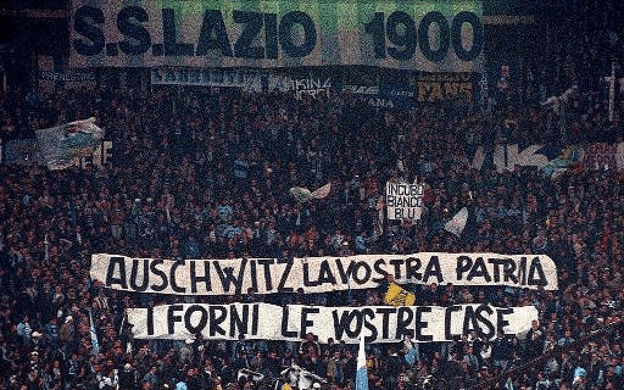
In the 1998-99 season, laziali unveiled a 50-meter banner that read “Auschwitz is your town, the ovens are your houses.” This was not just an isolated incident, but rather the conception of what occurs through using hate to spread propagandist ideologies as well as a general lack of awareness and compassion.

Lazio’s Anti-Semitic banner reveals the dark side of derbies

One could have expected them to leave such appalling actions behind them, however Lazio’s ultras have shown that their bigoted worst will never cease to exist.

In 2013, they had posted stickers of Anne Frank in a Roma shirt around several areas of the city. Four years later, this incident resurfaced during their clash against Cagliari when the same stickers were stuck on glass barriers.

While 13 supporters received stadium bans and Lazio players warmed up in t-shirts which read “No to anti-Semitism”, the fact that club president, Claudio Lolito’s promise about taking 200 fans every year for a trip to Auschwitz is yet to be put into action is a reflection of the dire state of racial sensitivity in Italy.

Violence and derbies go hand-in-hand and the Rome derby has had its fair share of incidents when matters have been taken into one’s own hands instead of feet.

A prime example of this occurred in 1979 when Lazio supporter, Vincenzo Paparelli was struck by a flare in the eye and eventually passed away, with the derby making history for all the wrong reasons as the fan became the first fatality in Italian football. This incident was an extreme indicator of the levels of intensity the tie could reach, however, the resultant of this feistiness was that it was a shameful representation of an iconic derby where ultimately, the pride is in battle.

In the 2004-05 campaign, the derby had truly reached its bizarre and hotheaded peak. As news broke out about the death of a young child outside the stadium after a police car ran into him, both sets of supporters were shell-shocked. As they caught a glimpse of a body covered in sheets, they assumed that it was that of the child and chaos had ensued.

Despite 7 announcements in the stadium that had confirmed that the rumor was false and the child was simply out of breath due to the spread of tear gas in the air. However, the news had fallen on deaf ears as the riots had already kicked into gear.

With 3 Roma ultras making their way onto the pitch and trying to reason with club captain, Francesco Totti, the Roman legend ordered the referee to call the match off due to fears of potential violence breaking out between all parties.

Ultimately, brawls did take centerstage after the match had transpired between the police and the supporters, resulting in 13 arrests and a staggering 170 injuries.

However, during the match, referee Roberto Rossetti contacted Lega Calcio president, Adriano Galliani via a phone call who decided to postpone the match on the spot and rightfully so.

Another situation that was indicative of the inconceivable lengths a certain fanbase is willing to go to in order to threaten their opponents was when the laziali hung dummies with Roma shirts near the Colosseum with a banner that read, “A warning without offence, sleep with the lights on!”

To say that the fervor of the derby gets the better of a select group of people is saying the least.

Ones for the highlight reel

In a clash that has had every conceivable situation occur on and off the pitch, certain moments of magic and madness have solidified the derby’s legendary status. Francesco Totti’s ‘selfie celebration’ against Lazio in front of the Curva Sud was one that send the Romanisti into ruptures, as II Gladiatore (The Gladiator) spearheaded a spirited comeback by netting a sensational brace. However, his exploits in front of goal may have slipped out of people’s minds after Totti’s unabashed act of passion showcased his adoration for his club and the Rome Derby.

Posing for a selfie with the Roma supporters was a sign of Totti moving with the times and the truth is that despite his age, the fire in the fixture’s top goalscorer and appearance maker’s belly about taking centerstage when all eyes were on him never ceased to flicker.

Speaking of prolific strikers, Vincenzo Montella’s sublime quartet is undoubtedly the standout performance in the Rome Derby. While his hattrick was a demonstration of his predatorial instincts in front of goal, Montella capped off a brilliant display with an absolute piledriver to bury the contest. Totti also joined in the act, dispatching an exquisite chip above the goalkeeper in a tie that finished 5-1.

The Eagles’, on the other hand will always hold their 3-0 drubbing of Roma in 2006 in high esteem, Cristian Ledesma’s scorcher from outside the box is perhaps one of the greatest goals to ever be scored in the history of the tie. With the contest right in the balance at 0-0, the midfielder’s strike was one that even left the laziali speechless.

However, in terms of palpable tensions and the sounds of nails being bitten during a derby, there is none above the 2013 Coppa Italia final. In a cagey affair where both teams were extremely cautious in their approaches, Senad Lulić’s winner secured silverware for Lazio in the first ever showdown between the rivals in a cup competition.

With Lazio and Roma vying for a Champions League spot this season, everything that makes the derby a spectacle is in store when these familiar foes match up in January 2020.

A Deep-Dive into football’s undying affinity with versatility

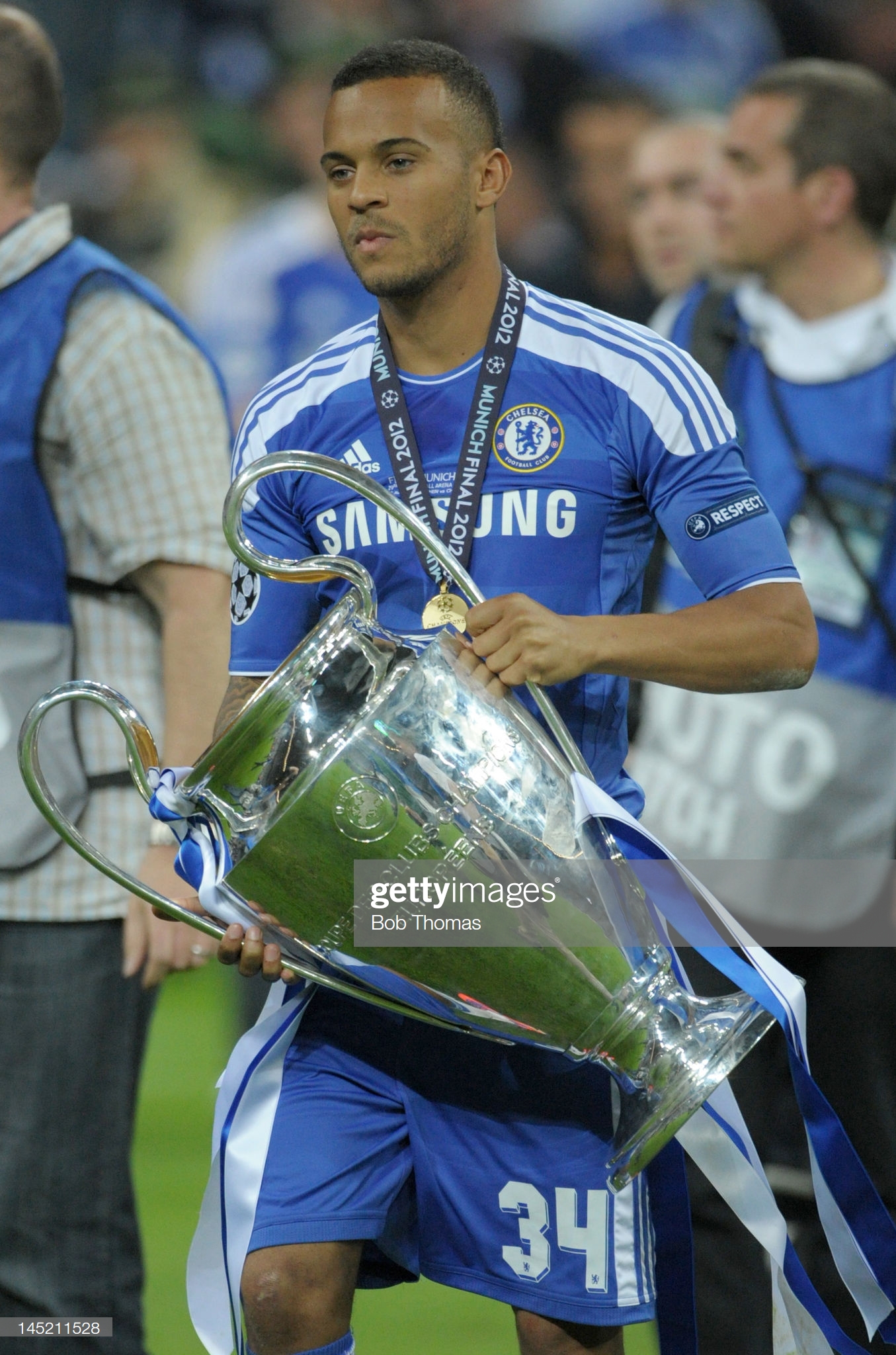
MUNICH, GERMANY – MAY 19: Ryan Bertrand of Chelsea with the trophy after victory in the UEFA Champions League Final between FC Bayern Munich and Chelsea at the Fussball Arena Munich on May 19, 2012 in Munich, Germany. The match ended 1-1 after extra time, Chelsea won 4-3 on penalties. (Photo by Bob Thomas Sports Photography via Getty Images)

Not many would be better attested to paying an ode to the power of versatility in football than Ryan Bertrand. In the wake of the seasoned Florent Malouda’s hamstring strain against Blackburn Rovers, the-then Chelsea sensation was thrown in at the deep end of debuting in a Champions League final. What’s worse? Bertrand was tasked with the job of filling in as a conservative left-winger, an unfamiliar role for the 22-year old while keeping the interchanging Robbery (Arjen Robben and Franck Ribery) quiet. With the world’s most daunting widemen raring to make a statement in front of a frenzied Allianz Arena that are always in the full swing of things, Bayern Munich seemed destined for glory at home.

The young Bertrand had plans of his own and repaid dividends to Roberto Di Matteo’s punt by suffocating the widemen; eventually ending up with club football’s most premium honor to his name, on the back of 5 loan spells before tasting the triumph of the Champions League in 2012.

With Bertrand’s claim to fame arriving due to his all-purpose attributes, the puzzling question is whether clubs should build their transfer policy around investing in versatile players? The simple answer is yes; however, it is critical to caveat this query by mentioning that youth players operate in a mirage of areas across the pitch in the academy.

Such multifaceted traits assist them in finalizing their natural position as they venture into the senior stages and it also enriches their physical and mental footballing development.

Ajax’s history of frugality can largely be credited to their blueprint of sowing the seeds of thorough coaching for years from the grassroot level in order to reap the rewards of all-rounded prodigies that have gone on to make a name for themselves across Europe. Systematic scouting and progressive coaching methods have been the ingredients to the Dutch club’s success. By working in close quarters with their prospects and developing them into superstars rather than forking out outrageous transfer fees on players that are a product of the same fundamentals, Ajax have been traditional, yet ahead of the curve.

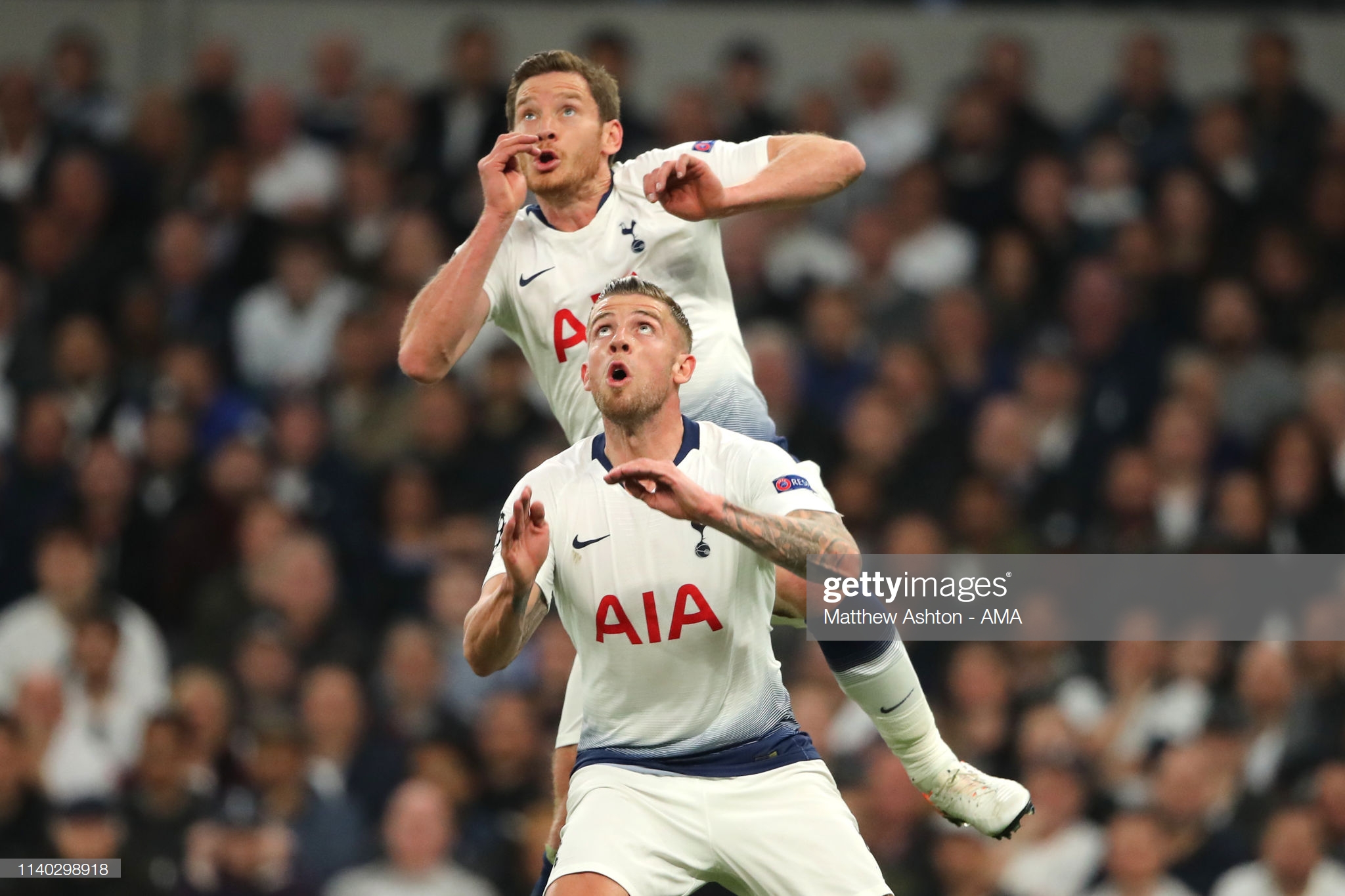
Spurs’ Belgian defensive duo of Toby Alderweireld and Jan Vertonghen are an embodiment of this philosophy.

LONDON, ENGLAND – APRIL 30: Toby Alderweireld and Jan Vertonghen of Tottenham Hotspur go up for a header together during the UEFA Champions League Semi Final first leg match between Tottenham Hotspur and Ajax at at the Tottenham Hotspur Stadium on April 30, 2019 in London, England. (Photo by Matthew Ashton – AMA/Getty Images)

Alderweireld remodeled his game by transforming himself from playing as a right-back into one of the Premier League’s most sought after centre-halves in recent history. Vertonghen, on the other hand continues to exhibit his astonishing versatility on the wrong side of 30 by putting in a matchwinning display as a left-wingback against Borussia Dortmund in the last 16 of the Champions League this campaign.

The synonymous factor behind both of these stories is that the players in question have remained the benefactors of a continuous improvement cycle that constantly sharpens their flaws and allows them to freely adapt according to what the situation demands.

While versatile players are regular features in any squad across the globe, clubbing them into certain categories has helped managers in deciding how to best utilize an all-rounder at his disposal.

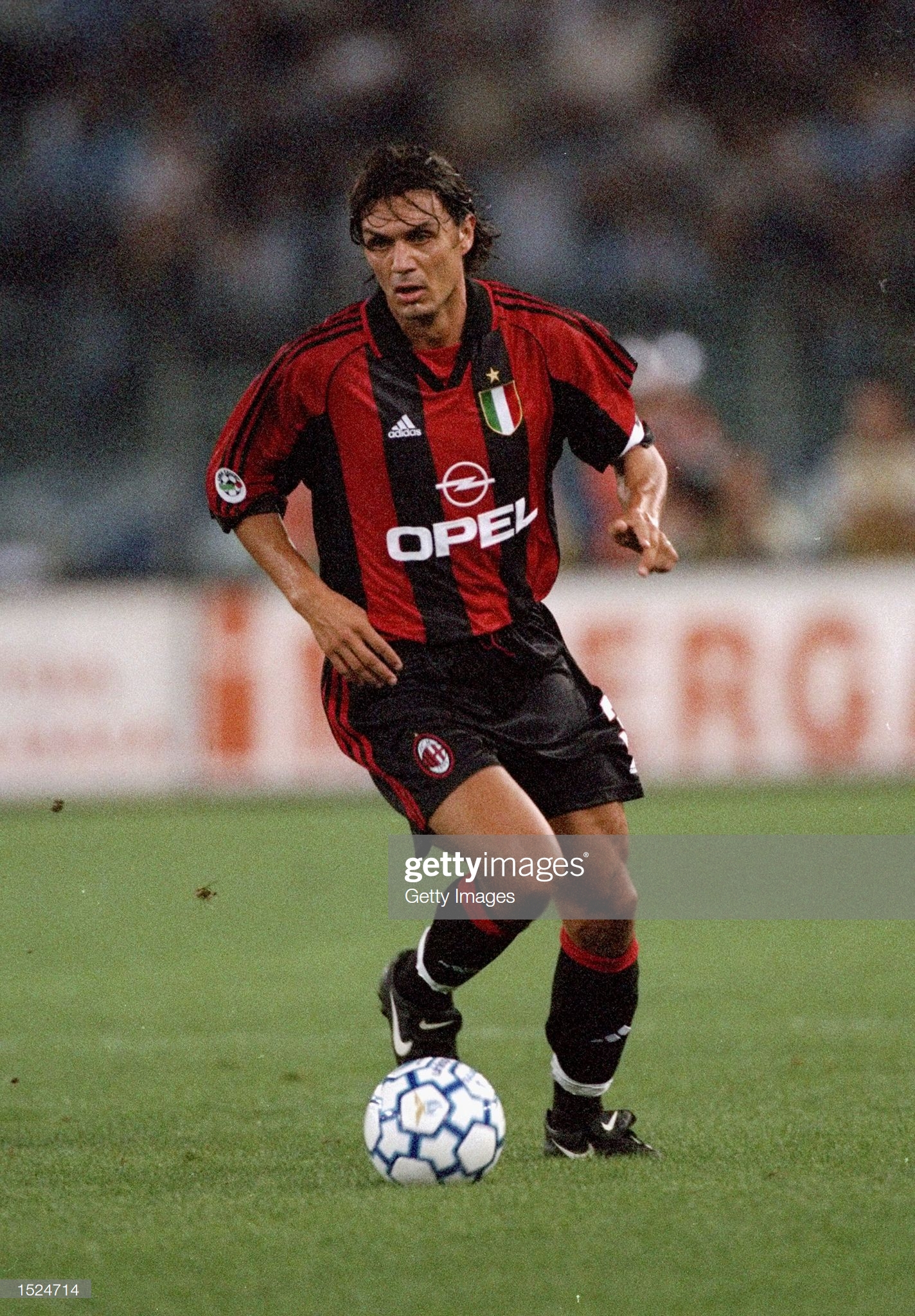
Without a doubt, the Renaissance man is the ultimate all-purpose player. Such players are generational finds that enter the fray as phenomenons and possess the gift to transition into deputizing at other positions with the same ease. Keeping these criterions as a basis for the title of a Renaissance man, the likes of Lothar Matthaus, Phillip Lahm and Wayne Rooney have showcased that they certainly are the master of all trades and jacks of none. However, AC Milan icon Paulo Maldini fits the bill like no other.

The naturally right-footed Italian began his Milanese romance by operating as a right-back, before he was switched to the opposite flank due to the presence of the combative Mauro Tassotti. While most players would struggle to acclimate to the positional shift, Maldini had found his true calling. Blessed with ambidextrous feet, the graceful left-back let his pegs do the talking as he reigned supreme as the world’s finest defender in what is heralded as one of the greatest backlines in the history of the sport.

3 Oct 1999: Paulo Maldini of Milan during the Italian Serie A game between Lazio and AC Milan at the Stadi Olimpico in Rome. \ Photo by Claudio Villa. \ Mandatory Credit: Allsport UK /Allsport

As Maldini entered into his 30’s, his preemptive understanding of the nature of the game made him realize that he would have to reinvent himself in a comparatively lesser taxing position to maintain his insurmountable levels. His flair for the art of defending led him to the role of a centre-back in which the Italian international’s famous observation reflected the towering benchmarks he had set for himself that were key to his legacy.

“If I have to make a tackle, then I have already made a mistake.”

With no signs of the fire in his belly flickering for even a moment in his career, it was no surprise to see the epitome of versatility, Paulo Maldini embark on a journey spanning 24 years in which he finally hung his boots at 41 years of age.

While the Renaissance men are few and far between, the utility man is a regular fixture in most sides. However, there is no disputing the fact that such unconventional talents do not receive the plaudits they deserve.

Liverpool’s James Milner has been associated with being such an unexciting player that a Twitter parody account that goes by the name of “Boring James Milner” does the rounds across social media for comic relief.

No malice is meant when fans poke fun at the Englishman, however there is a strong element of underappreciation about Milner’s one-of-a-kind skillset.

Starting his career as a central midfielder for Leeds United, Milner had burst onto the scene as the youngest ever player to score in the Premier League after getting on the scoresheet against Sunderland. Heralded as England’s beacon of hope in the middle of the park, the veteran’s career panned out in a way where he was deployed in a series of positions.

However, it was at Manchester City where Milner’s multifaceted range of skills were at its peak as he was assigned to play all across the frontline, especially as a right-winger and was also reverted back to his natural midfield role on occasion.

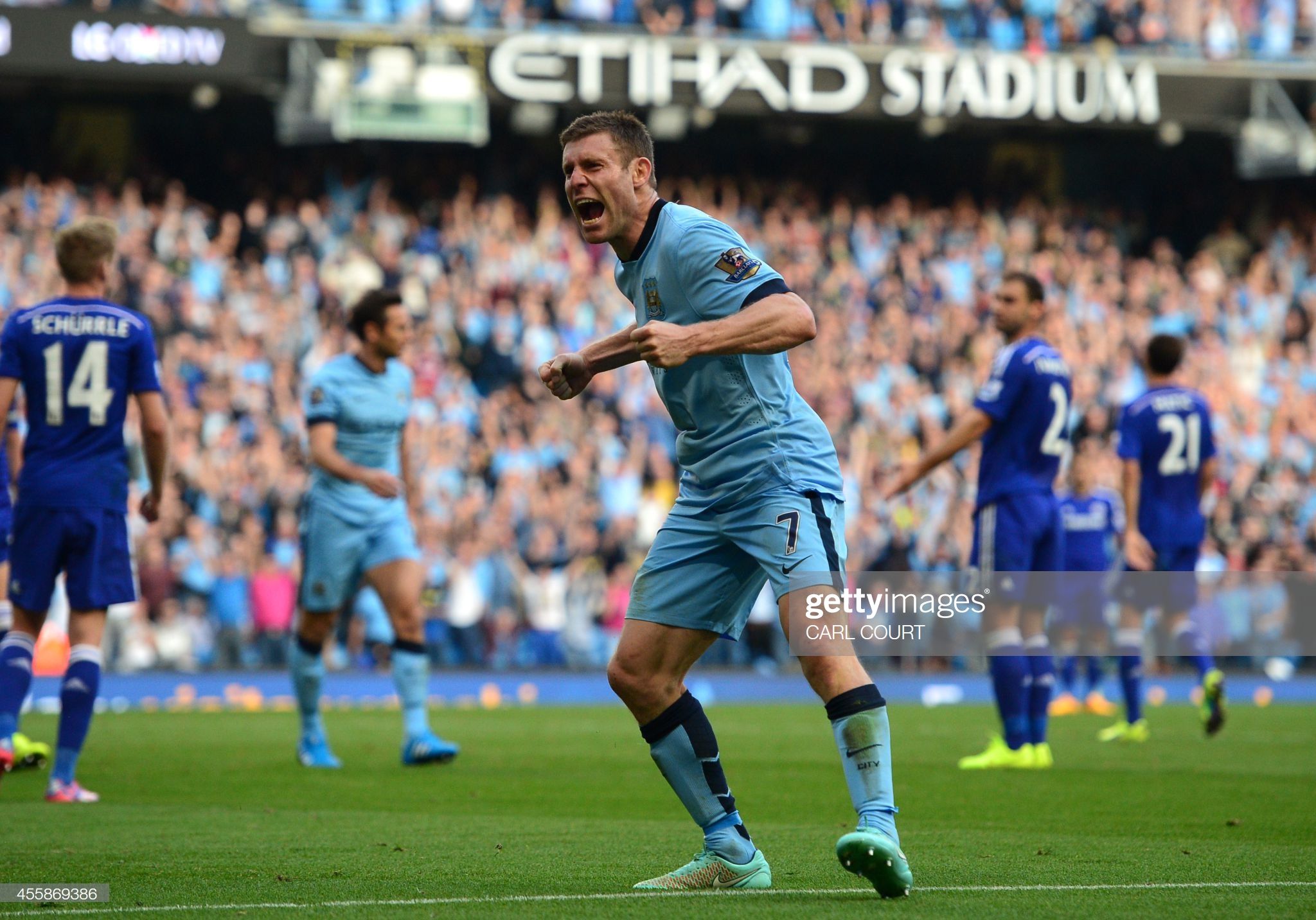
Manchester City’s English midfielder James Milner celebrates after Frank Lampard scores their equalizing goal during the English Premier League football match between Manchester City and Chelsea at the Etihad Stadium in Manchester on September 21, 2014. The game finished 1-1. AFP PHOTO/CARL COURT RESTRICTED TO EDITORIAL USE. No use with unauthorized audio, video, data, fixture lists, club/league logos or live services. Online in-match use limited to 45 images, no video emulation. No use in betting, games or single club/league/player publications. (Photo credit should read CARL COURT/AFP/Getty Images)

His versatility was put to the test when the Sky Blues were a goal and also a man down against Chelsea after Pablo Zabaleta was sent off. As Manuel Pellegrini brought on Bacary Sagna to occupy the Argentine’s position, sacrificing the more offensive-minded Aleksandar Kolarov at left-back, Milner was instructed to do a job. Not only did the Yorkshire native hold his own but he bombed down the flank to set Frank Lampard up with an inch-perfect cross to score the leveler against his former club. That display was James Milner in a nutshell: all heart.

Other notable utility men in English football as far as the recent past is concerned are names like Michael Antonio and Ryan Fraser who possess a similar skillset of coming up trumps wherever they are positioned.

The final category of versatile footballers fall under the category of those that completely revamped their styles of play in order to prolong their careers at the highest level. Such individuals have had longevity as a major factor during their time playing the beautiful game and in addition, they possessed the hunger to learn despite reaching the stars.

While several players can raise their hands up in association, the case studies of two legendary wingers at Manchester United can be put under the scanner in order to define this particular class in the best way possible.

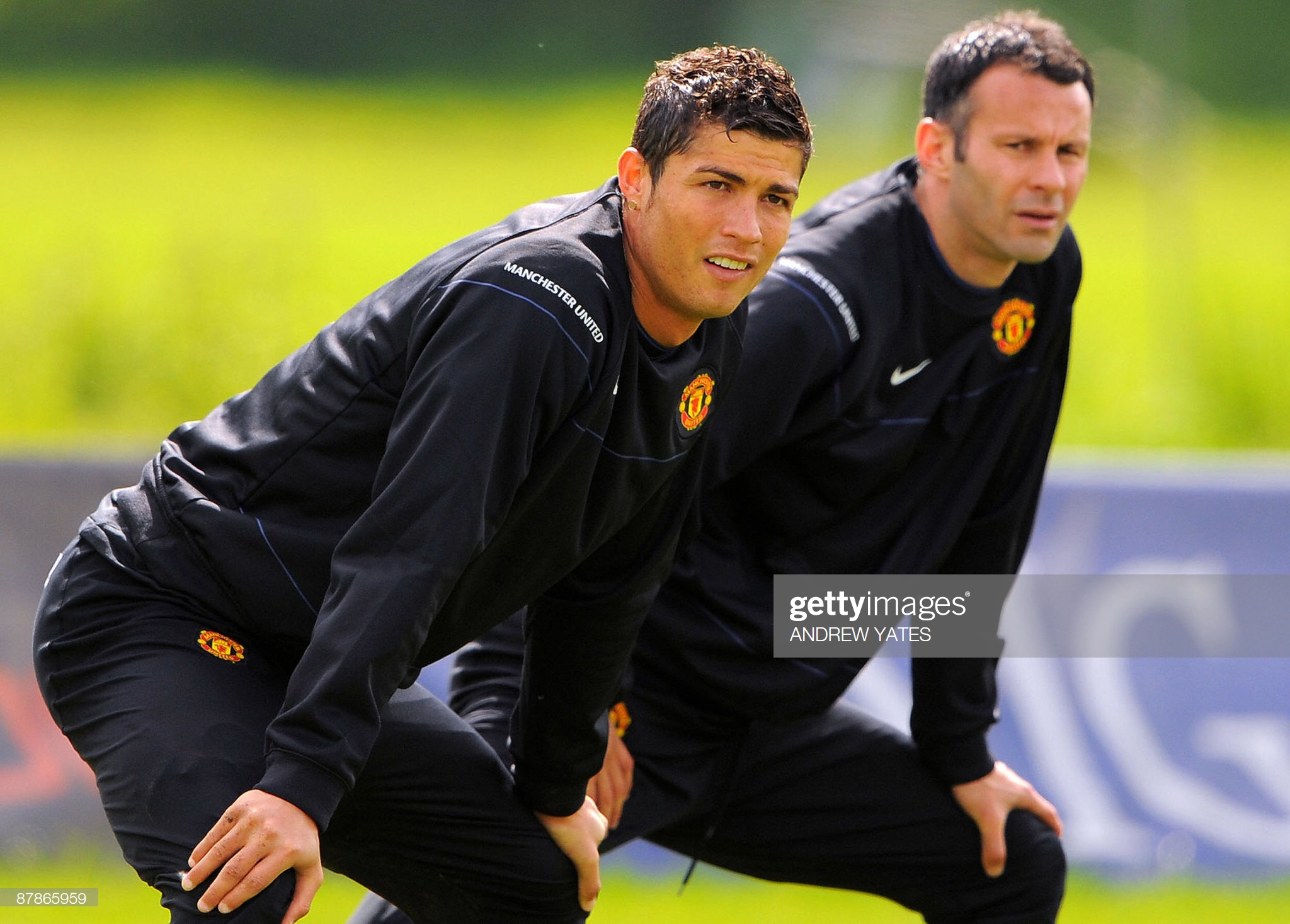
Ryan Giggs and Cristiano Ronaldo, two high-flying wingers that had pace, trickery and an eye for goal in abundance considered age as a major factor in their positional makeover.

Manchester United’s Portuguese midfielder Cristiano Ronaldo (L) and Manchester United’s Welsh midfielder Ryan Giggs look on during a training session at the Carrington training complex, in Manchester, north west England, on May 20, 2009, in preparation for next week’s UEFA Champions league final against Barcelona in Rome. AFP PHOTO/ANDREW YATES (Photo credit should read ANDREW YATES/AFP/Getty Images)

When Giggsy was setting foot into the twilight of his career, he decided to play in a more withdrawn role in central midfield and made things tick. To get an idea of just how good the Welshman was in his newer position, his stunning assist for Michael Owen’s winner in the 2009-10 season is enough evidence of his class.

At 34 years of age, Ronaldo shows no signs of slowing down as he defies age by the day. However, even the physical specimen that is the Portugese superstar has strayed away from his days of tricks, flicks and swivels and has instead become more of a No.9 with age.

The tweak in his position has made him place more of an emphasis on goalscoring as his finishing still remains the most complete as compared to any forward in the world.

Versatility, much like footballers themselves comes in several styles and while it is commonplace to reduce an all-purpose player to someone who is capable of just “doing a job”, it is much more than that. Players that possess the V-factor have the culmination of footballing intelligence and athleticism that truly makes them a cut above the rest.

Borussia Dortmund’s sale of Abdou Diallo is a transfer blunder

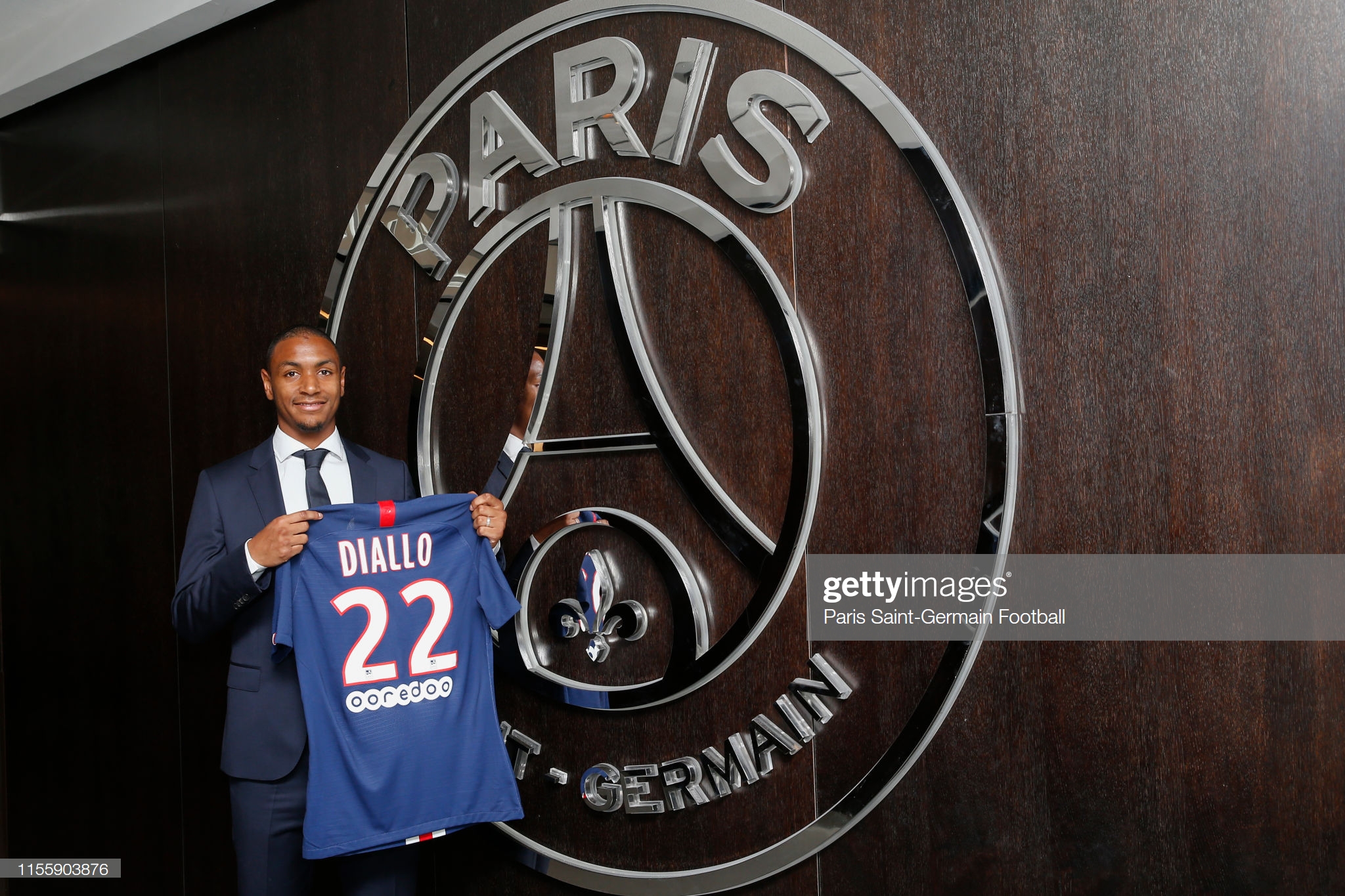
Abdou Diallo signs a five year contract with Paris Saint-Germain at Parc des Princes on July 16, 2019. (Photo by Sebastien Muylaert – PSG/PSG via Getty Images)

Borussia Dortmund’s perennial underdog status has managed to soften even the most stone-hearted skeptics into falling head over heels towards football’s resident hipster club. Whether it may be their rise from the ashes of bankruptcy to ultimately reach a Champions League final or their unmatchable atmosphere at the Westfalenstadion emitted by The Yellow Wall, tipping your hat to the German giants is commonplace

However, one of the principal factors behind this universal admiration for Dortmund is their keen eye for spotting gifted young prospects and nurturing them into becoming superstars. Christian Pulisic’s surge from arriving on German shores as a 16-year old from Pennsylvania to signing on the dotted line of a 58 million-pound transfer is indicative of their sensational youth development policy. Despite the American winger’s departure from their club, Die Borussen’s youthful spine would have inspired confidence among them until Abdou Diallo’s shock sale to Paris-Saint Germain was confirmed.

Dortmund and Diallo’s Honeymoon Period

Signed from Mainz 05 in 2018, Diallo’s Bundesliga experience was for all to gawk at as the-then 22-year old defender wasted no time in announcing himself in the black and yellow strip. During his time at the Westfalenstadion, the former French Under-21 skipper has ticked all the boxes one must to qualify as a modern centre-half.

Defensively, Diallo left no stone unturned. With 2.2 tackles and interceptions under his belt over 27 league starts this season, the marauding defender emerged as a revelation. In terms of distributing the ball, he racked up an impressive 64.9 passes per match at a success rate of 89% which is a testament to his comfort on the ball. His brilliant crossfield-diagonal passes to the right flank, particularly to Jadon Sancho have been a staple to Dortmund’s forays forward.

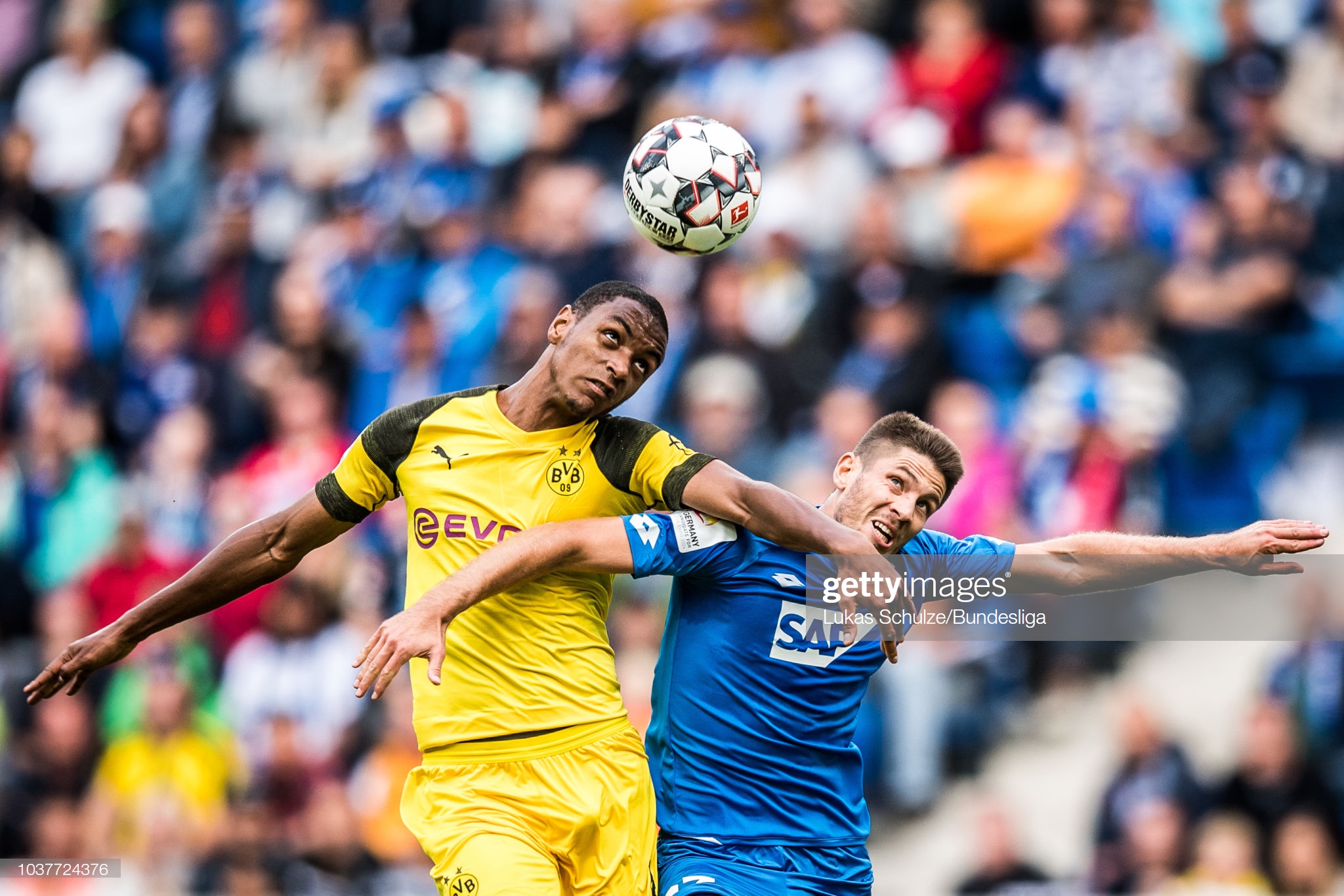
SINSHEIM, GERMANY – SEPTEMBER 22: (EDITORS NOTE: Image has been digitally enhanced.) Abdou Diallo (L) of Dortmund and Andrej Kramaric (R) of Hoffenheim fight for the ball during the Bundesliga match between TSG 1899 Hoffenheim and Borussia Dortmund at Wirsol Rhein-Neckar-Arena on September 22, 2018 in Sinsheim, Germany. (Photo by Lukas Schulze/Bundesliga/DFL via Getty Images )

Apart from these traits, the ex-Monaco man’s versatility made him an indispensable piece to Lucien Favre’s puzzle as he operated as a left-back in the second half of the campaign. By his own admission, Diallo would much rather play in his natural position and putting his performances under the scanner, his form was slightly hit-and-miss. However, the Frenchman’s ability to step up to such an unfamiliar challenge and ably perform on several occasions is yet another positive sign.

To boast of such a well-rounded defensive talent at such a young age signaled a long-term investment into a player who could well and truly become the benchmark in his position as time progressed. Dortmund sporting director Michael Zorc had once again bagged a prospect with immense potential as per and Diallo’s affiliation with the Black and Yellows looked set in stone for years to come.

Rekindling the Hummels affair spelt the split for Diallo

After a successful season for Dortmund that ended on a bitter note as they imploded on their way to lift the Bundesliga crown and handed it on a silver platter to rivals Bayern Munich, it was time for Favre’s men to regroup once again. The silver lining for the Signal Iduna Park faithful was that this current crop of youth and experience exhibited that they could usurp the kings of German football and with their excellent additions of Nico Schulz, Julian Brandt and Thorgan Hazard, the Black and Yellows sent out the ideal statement.

Ultimately, absurdity reigned supreme as Mats Hummels returned to Der BVB for an exorbitant 38 million euros. While one may point towards the triple-digit transfer fees that are branded about on a regular basis, the investment is far beyond financial terms. With Favre laying the groundwork for world football’s standout young defensive trident in Manuel Akanji, Dan-Axel Zagadou and Abdou Diallo, signing a 30-year old Hummels who is way past his best is as nonsensical as it gets.

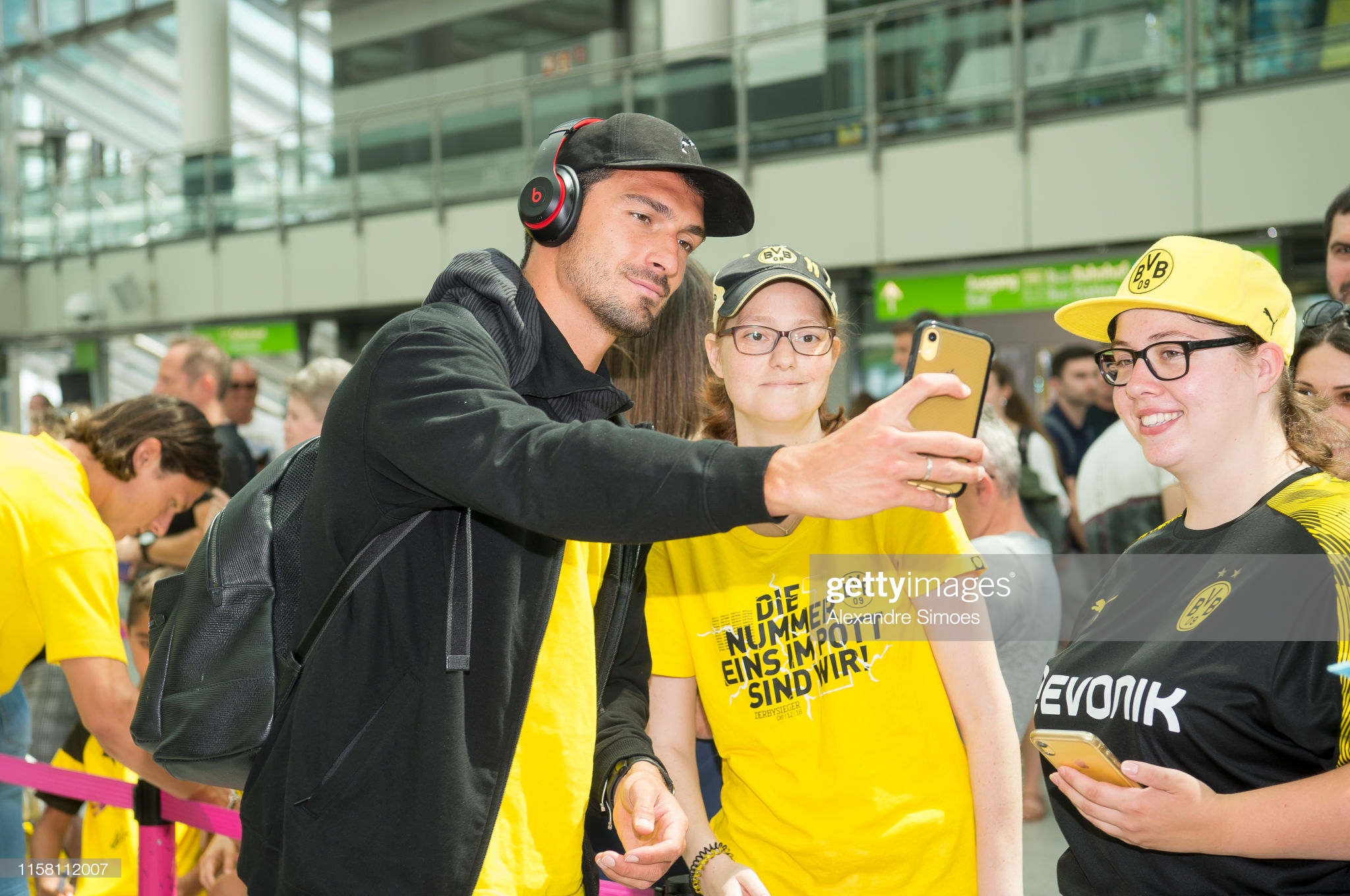
Mats Hummels is back in Black and Yellow (Photo by Alexandre Simoes/Borussia Dortmund via Getty Images)

With Bayern Munich bringing in the likes of Lucas Hernandez and Benjamin Pavard to freshen up their back four by incorporating younger blood, deeming Hummels surplus to requirements, Dortmund’s acquisition of the World Cup winner lacks a vision in the similar vein.

To further rub salt in the wounds of the Black and Yellows fanbase, the crown in the jewel of their defense in Diallo has been sold to PSG at a bargain of 32 million euros. In both footballing and financial terms, the decision to bid the youngster farewell is a real headscratcher.

Michael Zorc’s nonchalant justification of the transfer was even more alarming, considering the immense ceiling for stardom that Diallo clearly possesses.

Zorc’s insistence towards a high return on investment could be rendered futile, considering that if Diallo were to continue to develop at the rapid rate he was at Dortmund, he would have been one of the most valuable commodities in Europe in a couple of years from now. In addition, Diallo’s side of the story was not as plain and simple and that there was a sense of the club and the player not being on the same page regarding his future.

On the pitch, Diallo is inarguably the club’s standout central defender and selling him at a miniscule profit of just 4 million euros from his initial transfer fee is uncharacteristically impulsive from the business-savvy board of Dortmund.

“Abdou has decided that he wants to take on another challenge and for us it was a good deal financially, that’s why we agreed to the transfer.”

If the idea behind signing Hummels was not only his pedigree as a player at the highest level, but also in order to guide Dortmund’s youthful defensive dynamos on how to reach the top, it would be understandable to a degree. However, bringing him in as a replacement for the brilliant Diallo is a case of moving one step forward and two steps back.

How will Dortmund move on post-Diallo?

Now that Diallo has put pen to paper at PSG, Der BVB must devise a plan of action without the all-purpose defender. Favre is expected to build his backline around veteran Hummels, taking into account that Dortmund splashed the cash to acquire the services of the experienced campaigner.

Both Akanji and Zagadou are expected to square up against each other in order to partner the former Dortmund captain, unless the trio are fielded in tandem in a 3-man defence. While Hummels may showcase that form is temporary and class is permanent, Dortmund’s hands are tied in a scenario in which they must put all their eggs in the basket due to an unnecessary big money signing that is clearly on the decline.

Dan-Axel Zagadou and Manuel Akanji are Dortmund’s brighest young defenders. (Photo by TF-Images/Getty Images)

The emergence of young gun Leonardo Balerdi is a positive sign for Die Borussen as Favre’s one-of-a-kind ability to turn raw talent into the best of the best could lead to the Argentine defender’s rise upturn in fortunes. Apart from Balerdi, Julian Weigl showcased his tactical malleability by performing ably as a right-sided defender in a back three.

There is no denying the wealth of talent at Dortmund’s disposal, however if one takes a closer look, only Akanji and Zagadou can be considered as certified starters. Balerdi has bags of potential, however his incorporation into the first team is yet to be fully tapped into while Hummels’ form has fallen off a cliff.

At left-back, Schulz’s acquisition is a highly shrewd one. However, the German international is more of a left-wing back and his deputy in Raphael Gurreiro’s adventurous attacking runs cannot make up for his defensive deficiencies.

While Diallo is far from the perfect option at left-back, the Frenchman is a boisterous defender and always presents a solid, if not spectacular alternative to Dortmund’s high-flying fullbacks.

Abdou Diallo is a product of meticulous scouting in a market where transfer records break season after season and bidding him farewell may be one that Dortmund may live to regret.

Design a site like this with WordPress.com
Get started